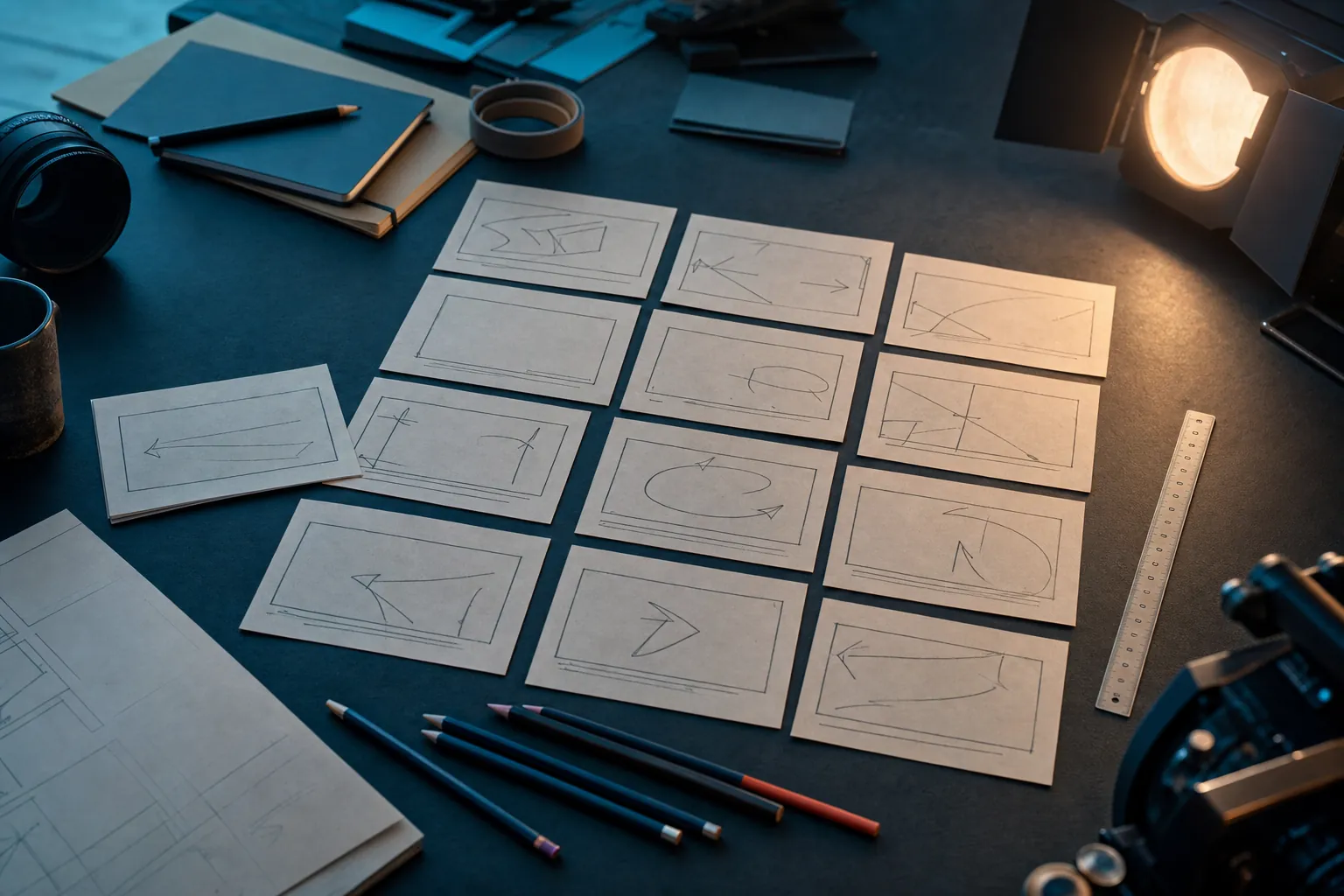
A commercial storyboard is where a good idea becomes something a team can actually make. It turns a creative conversation into a sequence of pictures, actions, sounds, and decisions. Before the schedule, the camera package, or the edit, it gives everyone a chance to see whether the story makes sense to the audience.
That is why a storyboard is more than a set of nice sketches. It helps a client decide whether the commercial is saying one clear thing, helps a director understand which moments need the most care, and helps the production team know what must be captured to make the final cut work. The goal is not to make every frame beautiful. The goal is to make the idea clear enough to protect it.
This guide explains how to create a commercial storyboard that is useful from the first creative review through production, editing, and the campaign that follows.
1. Start with the commercial's one job
Do not start by drawing shots. Start by naming the change the commercial needs to create. A storyboard can be polished and still fail if the team has not agreed on what the audience should understand, feel, or do after it ends.
Write the job in plain language. It might be helping a local audience remember a new brand, showing why a familiar service is different, making an offer feel more useful, or giving a customer a reason to take the next step. That sentence becomes the test for the whole sequence. If a frame does not help create that response, it probably does not need to be in the main commercial.
It also keeps the team from trying to fit everything into one spot. A brand can have many features, audiences, and selling points. The audience will not sort them into a hierarchy while the ad is playing. The storyboard should show one central idea moving forward, not a list of valid facts competing for attention.
2. Decide what the audience needs to see first
The first seconds of a commercial need to create a reason to keep watching. They do not have to be loud or complicated. They do need to place the viewer inside a recognizable problem, promise, image, or question quickly enough that the next frame feels worth seeing.
Begin the storyboard with the strongest entry into the idea. That could be a human reaction, an unexpected visual, a product in action, a familiar frustration, or a line that changes how the viewer sees the situation. Draw or describe the frame simply, then add a short note about its job. For example: "A homeowner tries to join a call as the connection drops. The viewer immediately understands the problem."
Keep the brand close enough to the opening that the audience can connect the feeling with the company. That does not mean adding a logo to every panel. It means the product, brand world, voice, or point of view should be part of the premise rather than an afterthought added in the final seconds.

3. Break the idea into story beats
A commercial storyboard works best when each frame has one job. Rather than trying to imagine every possible angle at once, map the larger beats of the story: the opening, the situation, the turn, the proof or payoff, the brand moment, and the next action. A 30-second spot may need only five to eight meaningful beats. A longer film may need more room, but the principle stays the same.
Give every beat a question. What does the audience understand here? What changes in this moment? What should they feel? If two frames do the same work, combine them or remove one. If a vital shift in the story happens between frames, add a panel so the production team does not have to guess at it later.
Do not make the sequence too literal. A storyboard is not a requirement to show every word in the script on screen. Picture and sound should support each other. If the viewer can see the problem, the voiceover can tell them why it matters. If a product demonstration proves the point, the dialogue can leave space for a human reaction instead of repeating the obvious.
4. Add simple notes that make the frame useful
A rough drawing alone rarely answers the questions a production team will have. Each storyboard panel should include a short description of the visual action, an estimated duration, and any sound, dialogue, music, or on-screen copy that affects the shot. It does not need a film-school vocabulary lesson. It needs enough information to show how the scene earns its place.
For example, a panel might read: "Wide kitchen. Parent looks at a frozen video call. Two seconds. Sound: brief digital glitch, then silence." That gives the client the emotional moment, gives the director a playable action, and gives the editor an early sense of pace. It is much more helpful than a frame labeled only "kitchen."
Use arrows for movement when they clarify the idea. Note whether a product comes into view, a person turns, a camera moves closer, or a graphic replaces the live action. A standard two-column audio-and-visual script format can also be useful alongside the board when timing and dialogue need a closer review.
5. Make timing visible before the shoot
Time is one of the most important things a storyboard reveals. A commercial can look comfortably paced on a page and still feel rushed once performance, music, transitions, and on-screen copy are added. Giving each panel an approximate duration forces the sequence to respect the format before anyone is standing on a set.
Start with a rough total. In a 30-second commercial, the opening, the central idea, the product or payoff, the brand, and the final action all need room. When the board puts three important messages into the final two seconds, it is showing the team a problem early enough to solve it.
Read the script aloud while you review the panels. Leave room for pauses, reactions, and the time it takes to read a line of copy. Then try a silent pass. If the sequence is confusing without the dialogue, the visual story may be doing too little work. A good board creates a commercial the audience can follow even in imperfect viewing conditions.

6. Plan the shots that cannot be improvised
Some moments need more detail because they carry the whole commercial. A precise product reveal, visual joke, effect, transition, performance beat, or final brand frame can be difficult to invent under pressure on the day. Use the storyboard to make those moments unmistakable.
Show the framing that matters. Is the moment a wide scene that establishes a world, a close-up that lets the audience notice a detail, or a point-of-view shot that puts them in the customer's shoes? Note the change the shot needs to create, not only the camera direction. The production team can then choose the best technical way to get there without losing the intent.
This is also where reference imagery can help. A still from the company's existing work, a location photograph, a product image, or a visual reference can clarify tone and scale when a quick sketch cannot. Keep the reference honest about what it is. It should guide the discussion, not promise an exact finished frame before the production has made the choices that create it.
7. Use the storyboard to plan the campaign versions
A commercial often needs more than one final file. It may require a shorter cut, a version with a local end frame, vertical social assets, a different call to action, or supporting images that carry the same visual idea into other placements. The storyboard is the right place to decide what the production needs to capture for those versions.
Mark any shots that need extra space around the subject for different crops. Flag lines that may need alternates. Plan clean product shots, brand moments, and reactions that can work outside the main sequence. These decisions are inexpensive on the board and much harder once the location, talent, or equipment are gone.
The purpose is not to create endless variations. It is to protect the central idea as it moves from a full commercial into the rest of the campaign. A connected TV campaign, a social cut, a search ad, and a landing page can each play a different role while still feeling like the same brand promise.
8. Review the board with the right questions
Before the storyboard is approved, review it as a customer would. Can someone understand the main idea without an explanation from the room? Is the opening strong enough? Does the sequence build toward a clear payoff? Does the ending give the audience a useful next step? Is the brand connected to the idea early enough to matter?
Then review it as a production team. Which frames must be captured exactly? What needs a location, a prop, a performer, a visual effect, or a particular sound? Where could the schedule get tight? Which shots will be needed for the shorter versions? The point is not to turn the creative review into a technical checklist. It is to make sure the board holds up once the plan becomes real work.
Last, check it against the wider campaign. If the commercial asks people to visit a page, will that page continue the same story? If it creates a question, does the next customer touchpoint answer it? Creative Eye Media's guide to writing a commercial script is useful for sharpening the words and sound around the visual sequence, while the commercial production guide shows how the work moves from idea into production and launch.
How Creative Eye Media helps
Creative Eye Media helps brands bring the message, the storyboard, the production, and the campaign around it into one conversation. That starts with the business response that matters, turns it into a visual idea people can follow, then plans the production and versions needed to carry that idea into the right places.
The result is not a prettier set of sketches. It is a clearer decision before the expensive part starts: a commercial that knows what it needs to say, what the audience needs to see, and where that attention should go next.
Plan It Before Production
Give the next commercial a clearer first frame.
Bring the idea, the production plan, and the campaign around it into the same room before the shoot begins.
Frequently asked questions
What should a commercial storyboard include?
A useful commercial storyboard shows the major shots in order, the action or purpose of each shot, rough timing, and notes about sound, dialogue, or on-screen copy when they affect the idea. It should make the sequence clear enough for the client and production team to discuss the same commercial.
Do I need to be able to draw to make a storyboard?
No. A storyboard needs to communicate the shot and the sequence, not prove artistic skill. Simple frames, arrows, labels, reference images, and a clear shot description are often more useful than a detailed illustration that does not explain what the audience should understand.
How detailed should a commercial storyboard be?
Match the detail to the risk of the production. A simple social spot may only need a few clear frames. A commercial with a precise visual effect, product reveal, performance beat, or complex location needs more detail so the team can protect the idea before the shoot day.
When should a storyboard be approved?
Approve the storyboard after the core message and script are clear, but before final production choices are locked. That is the moment when a team can still improve the sequence, timing, and customer journey without paying to undo work on set or in the edit.