Video production cost is a reasonable question, but it rarely has a useful one-line answer. Two videos can have the same runtime and entirely different budgets because they are solving different problems. One may be a focused customer story filmed in a single location. The other may need a campaign concept, casting, production design, several locations, original music, multiple formats, and a launch plan that carries the idea beyond the first cut.
The better question is: what needs to be true when this video is finished? If the goal is simply to capture a conversation, the scope can stay lean. If the goal is to make a new offer memorable, earn attention in a crowded market, and give people a clear next step, the budget needs to protect the creative and production choices that make that possible.
This guide explains what shapes video production cost, what a clear quote should cover, and how to make budget choices without quietly shrinking the value of the work.
Start with the job, not the number of seconds
It is tempting to begin with a format: a 30-second commercial, a two-minute brand film, or a handful of social cuts. Format matters, but it does not define the work on its own. A short commercial can be one of the most demanding things a team makes because every second has to earn attention, communicate a promise, and leave room for the brand. A longer interview film can be simpler if the message, location, and approval path are already clear.
Start with the business decision the video needs to influence. Are you introducing a new offer? Giving a local audience a reason to choose you? Supporting a product launch? Making a complex service easier to understand? Building recognition before a sales conversation? The answer determines whether the budget should prioritize a sharp concept, a strong on-camera performance, a visual demonstration, original sound, multiple placements, or a combination of those pieces.
The strongest scope is specific about the result without dictating every production choice too early. It gives the team room to find the most effective way to make the message real, while keeping the project anchored to the customer response that matters.
That is why published pricing guides can be useful for context but cannot replace a project scope. For example, Clutch's 2026 video-production pricing guide notes that crew size, location, timeline, and project complexity all affect the final cost. Those are not fine-print details. They are the choices that determine what the production must actually do.
A good first brief does not need to be formal. It needs to name the audience, the problem or opportunity, the main message, where the work will run, what should happen after someone sees it, and who needs to approve it. That gives the production team a real job to price instead of a vague request to "make a video."
What a commercial budget usually includes
A useful commercial budget follows the work from the first conversation through the final files. The names of the line items may vary, but the responsibilities should be clear. If a quote only describes a camera and an edit, ask where the idea, planning, sound, graphics, revisions, and delivery versions are being handled.
Creative development covers the thinking that turns a business need into an idea the audience can understand and remember. Depending on the project, that can include discovery, a creative concept, messaging, a script, a treatment, a storyboard, and reference planning. This is not decoration before the shoot. It is how the team decides what the audience needs to see, hear, and feel.
Pre-production makes the idea workable. It can include scheduling, location scouting, permits, casting, wardrobe, props, production design, crew planning, equipment, call sheets, release forms, and coordinating the people who must be in the right place at the right time. The more variables a shoot has, the more valuable this work becomes. Good planning is cheaper than trying to repair an unclear plan once people, gear, and a location are booked.
Production is the shoot itself: directing, camera, lighting, sound, crew, equipment, travel, locations, talent, hair and makeup, and the practical support that keeps the day moving. A simple single-camera interview needs a different team from a concept-driven commercial with several scenes. Neither is inherently better. The right crew is the crew that can make the intended work well.
Post-production shapes the captured material into a finished experience. Editing, color, sound design, music, voiceover, motion graphics, visual effects, captions, and review rounds all live here. Post-production is also where a clear plan pays off. When the story and deliverables were agreed early, the edit can spend its energy making the idea stronger instead of trying to reconcile conflicting late notes.
Delivery covers the finished master and the versions needed to use it. A commercial may need a 30-second and 15-second cut, vertical social edits, a streaming-TV version, platform-specific end frames, captions, a clean version without text, stills, or a regional variation. These are not automatic exports. A version works when the framing, message, timing, and call to action still make sense in that placement.
The choices that move the cost most
Budgets grow when a project adds meaningful complexity, not because someone has decided that "cinematic" should be expensive. The goal is not to avoid every cost. It is to spend on the elements that make the message believable, memorable, and useful for the intended audience.
The idea and script. A direct-to-camera explanation may only need a strong interviewer, a clear outline, and a good location. A story built around a visual surprise, a performance, or a product demonstration may need more planning, design, and coverage. The concept sets the production requirements. That is why a team should decide what the commercial is truly about before comparing line items.
The number of production variables. Every additional location, cast member, shoot day, product setup, wardrobe change, or practical effect creates coordination work. A campaign with one excellent location and a carefully chosen cast can feel more intentional than a campaign that tries to visit five places in one day. Scope control is not always about making the work smaller. It is about giving the best parts enough room to land.
Sound and music. Sound often carries the feeling of a commercial before a viewer has consciously processed the message. Clean dialogue, a considered music direction, a voiceover that fits the brand, and sound design that makes a visual moment land all require time and judgment. Using a track without the right license can create a problem after the video is finished, so music rights and usage should be agreed as part of the scope rather than treated as an afterthought.
Graphics, animation, and effects. A simple title treatment is different from a custom motion system, a product visualization, or an effect that needs to integrate with live action. These elements can be worth the investment when they clarify something the camera cannot show or give a campaign a distinct visual world. They are less useful when they are added only because the underlying idea feels thin.
The number of final versions. A well-planned campaign can make multiple assets from one production, but each useful version still needs editorial attention. A vertical edit is not always a horizontal commercial with the sides removed. Planning for different formats from the first shot list gives the editor the material to make versions that feel made for their destination.
Why a 15-second commercial can cost more than a two-minute film
Runtime is only one measure of work. A short commercial might require a complete concept, a cast, a location, art direction, a tightly timed script, a day of production, product shots, original music, sound design, graphics, and several alternate endings. A two-minute customer story might take place in one office with one person and a more straightforward edit. The short piece can be more expensive because it asks for more precision and has more moving parts.
The same principle applies to social media. A short vertical video can be quick to make when it is built around an honest moment, a simple demonstration, or a direct message. It can also become complex when it is expected to carry a full commercial concept, polished art direction, multiple actors, and a dozen variations. There is no problem with a higher-ambition asset, but it should be budgeted as one.
Before approving a scope, separate the must-haves from the nice-to-haves. The must-haves are the elements required for the video to do its job: perhaps the main concept, the right product demonstration, a credible location, clear sound, and the final format needed for the campaign. Nice-to-haves may still be valuable, but they should not crowd out the core idea or make the schedule impossible.
How to compare video production quotes fairly
Two quotes with different totals are not automatically competing offers. They may be describing completely different projects. One may include the concept, cast, location management, sound, music, motion graphics, and several final versions. Another may assume that the client will supply the script, location, talent, and all approval decisions, then deliver one finished file. Comparing only the total can make a cheaper proposal look like the same thing when it is not.
Ask each prospective partner to explain the scope in plain language. What is included before the shoot? How many production days and locations are assumed? Who is responsible for casting or talent? What crew and equipment are included? What happens in the edit? How many review rounds are planned? Which final files, aspect ratios, and captions will be delivered? What could change the price after the project starts?
Look closely at assumptions. A proposal may be entirely reasonable, but it needs to say whether it assumes one location, one interview, client-provided products, a fixed script, stock music, a particular number of edit rounds, or a single final version. Assumptions are useful because they make the cost understandable. Hidden assumptions are where budgets get difficult.
It also helps to ask what the partner would protect if the budget needed to come down. A thoughtful answer will identify the creative essentials and suggest where scope can be simplified without breaking the message. That might mean combining locations, reducing the number of setup changes, focusing on one stronger concept, filming deliverables in the same day, or postponing a secondary version. "We can do it cheaper" is not a plan. A clear tradeoff is.
A simple way to scope a first estimate
You do not need to have every production detail solved before asking for an estimate. You do need enough clarity that the producer can tell the difference between a simple filmed conversation and a campaign with a dozen hidden variables. A good first conversation should make the unknowns visible, then decide which ones need answers before the budget is finalized.
Begin with the audience and outcome. Describe who needs to see the work, what they are deciding, and what should be different after the campaign runs. A restaurant might need more local families to recognize a new location before opening week. A business-to-business service may need prospects to understand a complex offer before accepting a sales call. An established brand may need a sharp new reason to be noticed in a familiar category. These are different creative problems, even if each client asks for "a video."
Next, describe the main deliverable in plain terms. Is the priority a 30-second streaming commercial, a website launch film, a product demonstration, a recruiting piece, an interview-led customer story, or a group of short social assets? Note any non-negotiables: a launch date, an approved message, a specific product, a spokesperson, a location, a required legal line, or a seasonal event. Then list what is still open. It is better to say that casting or locations are undecided than to let a quote assume they do not matter.
Ask for a scope that separates the core production from optional layers. The core might include creative development, one shoot day, editing, basic sound work, captions, and a defined set of final files. Optional layers might include a second location, extra talent, original music, custom animation, product photography, additional shoot days, or more versions. That structure makes it easier to see what each choice adds, and it keeps an early budget discussion from becoming a false promise.
Finally, name the approval process. Who has the authority to settle the concept? Who will collect feedback? How many review rounds should the schedule allow? A project can have a strong creative idea and sufficient production money, then lose time and budget because several stakeholders are trying to make different commercials in the edit. One clear feedback path is both kinder to the creative work and easier on the budget.
A first estimate should also distinguish a planning range from a locked production budget. Early in the process, a range can help the team decide whether the right approach is a lean single-location production, a broader campaign shoot, or a phased plan that starts with one essential asset. Once the concept, deliverables, and production variables are agreed, the estimate should become more specific. That progression is normal. It is far more useful than forcing a precise number before the project has a defined shape.
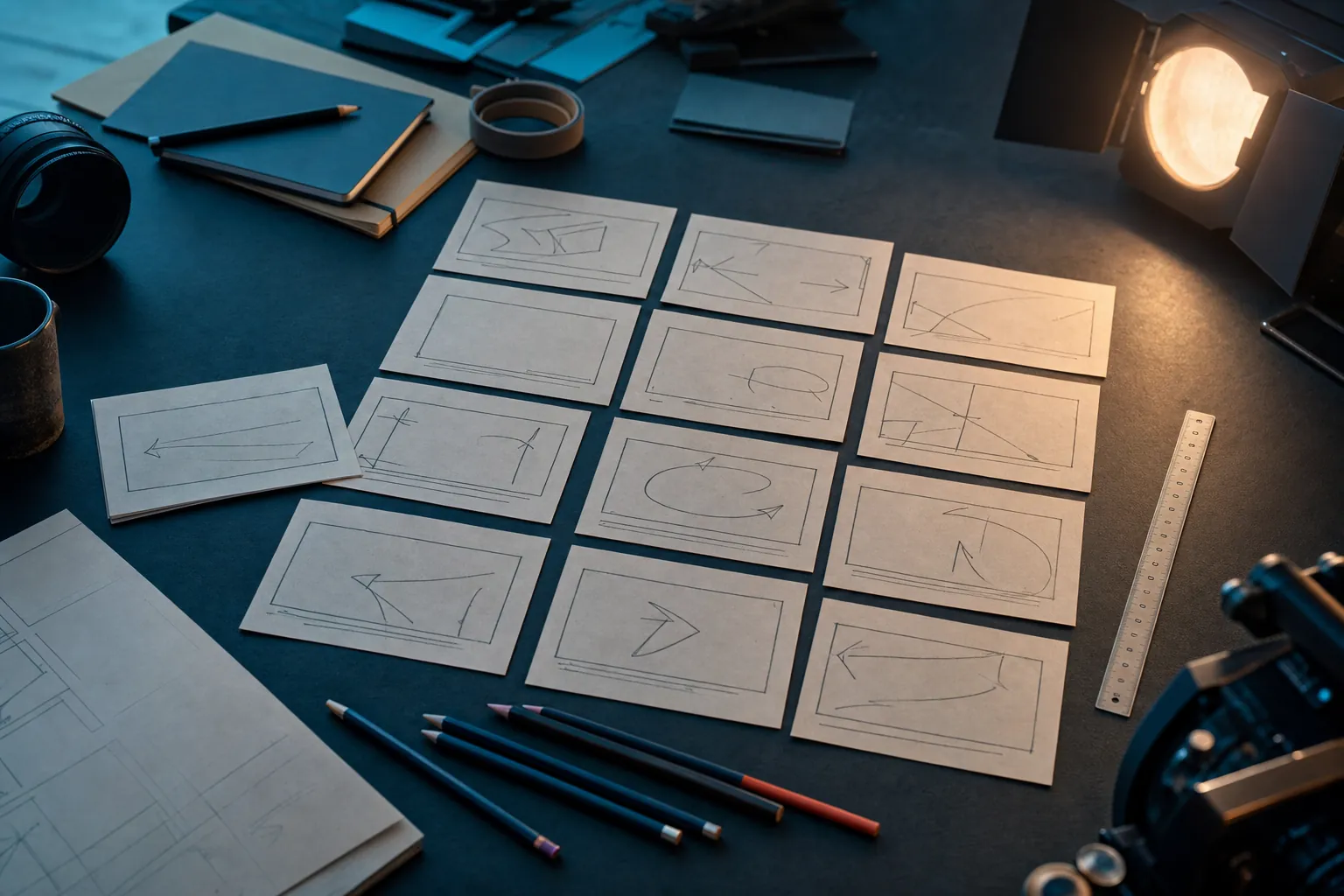
Creative Eye Media's commercial storyboard guide is useful once the main idea is ready to become a sequence. A board gives the team a chance to test the scenes, timing, and must-have shots before the production schedule is locked.
Budget for the campaign, not just the shoot
A video earns its keep when it keeps working after the shoot. That does not mean every project needs a huge distribution plan. It means the team should decide where the work will appear before finalizing what must be captured. A streaming-TV commercial, a website hero, a paid social campaign, an email launch, and a sales presentation all create different requirements for timing, framing, captions, and the next customer action.
Start with the landing point. If a commercial asks people to visit a page, that page should continue the promise the video made. If it introduces a new offer, the sales or service team should be ready for the questions it creates. If it is designed to build broad recognition, decide which signs will show that the campaign is doing its job. Creative Eye Media's guide to planning a connected TV advertising campaign explains how audience, creative, media, and measurement can support each other.
Then plan the content that can come from the same production. A short hero spot may be accompanied by product details, customer moments, vertical cutdowns, stills, sound-only versions, or alternate calls to action. The smart move is not to demand every conceivable asset. It is to identify the few pieces that will make the main idea travel further and capture them while the people and location are available.
A campaign-minded scope also makes approval easier. The client can see the role of each deliverable, the production team knows what must be captured, and the editor is not asked to invent a new use case from footage designed for a different one. Creative Eye Media brings video, audio, design, and advertising into the same conversation because those handoffs are where a good idea is often weakened or lost.
Five ways to get more value from the budget you have
1. Settle the message before booking the shoot. The clearest way to waste a video budget is to make a well-produced answer to the wrong question. Decide what the audience should understand, feel, or do, then let that choice guide the creative and production plan.
2. Keep one idea at the center. A commercial does not need to carry every benefit, audience, and offer at equal volume. Choose the strongest thought, then let the landing page, sales conversation, and supporting campaign do the rest. Creative Eye Media's guide to planning a video advertising campaign shows how a single clear idea can guide the work.
3. Plan the final versions early. Name the formats, runtimes, placements, end frames, and captions before the camera rolls. This gives the production team a chance to capture the right framing and coverage instead of forcing a new message out of footage that was never meant to carry it.
4. Give feedback a clear path. Choose one person to consolidate feedback and agree on what each review is meant to decide. A useful first-cut review focuses on the story, message, and pacing. Fine visual preferences are easier to resolve once the team agrees that the central idea is working.
5. Reuse what remains useful. Save clean masters, approved graphics, music details, caption files, stills, and strong unused material. Organized delivery makes it easier to adapt a successful campaign, create a follow-up, or give a future production a running start.
How Creative Eye Media helps
Creative Eye Media helps brands build a production scope around the work the campaign actually needs to do. The process can begin with the audience and business response, move into the concept and production plan, then carry through sound, edit, final versions, and the places where the message needs to work.
That approach is useful when a business wants more than a finished file. A commercial needs a clear idea, a production plan that protects it, and useful assets that help it keep moving after the first edit is approved. Explore the studio's commercial video work, audio and music work, and campaign advertising work to see how those pieces can connect.
Plan the Work
Make the next production budget work harder.
Bring the message, production scope, and campaign plan into the same conversation before the schedule starts.
Frequently asked questions
How much does professional video production cost?
Professional video production cost depends on the job the video needs to do and the resources needed to make it. A simple interview-led piece can be much smaller than a commercial with casting, locations, original music, multiple shoot days, visual effects, and several campaign versions. A useful estimate starts with the audience, message, production scope, and final deliverables, not just the runtime.
What should be included in a video production quote?
A clear quote should explain the creative and planning work, production days, crew, equipment, locations or travel when needed, post-production, music or licensing, graphics, revision process, and final deliverables. It should also make clear which items are assumptions so there are no surprises when the idea develops.
Does a shorter commercial cost less to make?
Not always. A 15-second commercial can require the same concept work, location, cast, lighting, crew, and edit discipline as a 60-second piece. Runtime affects some parts of the work, but the creative ambition, number of production variables, and number of finished versions usually have a larger effect on the total.
How can I keep a video budget under control?
Decide the audience, the message, the approval path, and the deliverables before the shoot. Protect one central idea instead of adding every feature to the script, consolidate feedback through one decision-maker, and plan the versions needed for each placement early. Those choices reduce late changes, which are usually more expensive than making a clear decision during planning.